
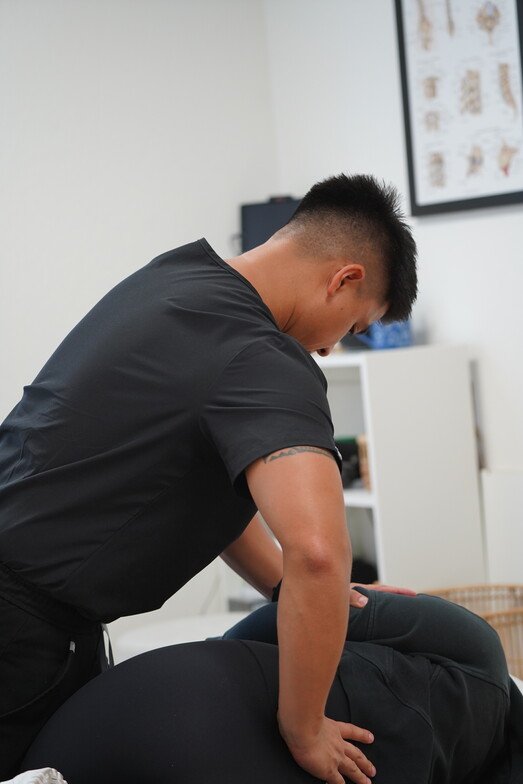




What Is a Chiropractic Adjustment?
Chiropractic Care
Frequently Asked Questions
About Adjustments
What does a chiropractic adjustment actually do? +
A chiropractic adjustment restores motion to a restricted joint. When a spinal or extremity joint loses its normal range of motion, the surrounding muscles compensate, neighboring joints overwork, and the nervous system sends pain signals. The adjustment delivers a precise, controlled input to that joint — restoring motion, reducing muscle guarding, and calming the nervous system response. The audible pop you sometimes hear is cavitation — a gas bubble releasing from joint fluid. It is not bones cracking and is not an indicator of a successful adjustment.
Why didn't chiropractic work for me before? +
The most common reason chiropractic doesn't produce lasting results is that adjustments alone don't address the movement pattern that caused the restriction. A joint gets restricted because the muscles around it aren't doing their job correctly — and adjusting the joint without retraining those muscles means the same restriction returns in days or weeks. At Modern Movement, every care plan includes corrective exercise and movement rehabilitation alongside adjustments, which is what makes the results stick.
Is chiropractic care safe? +
Yes. Chiropractic has a strong safety record. Serious adverse events from spinal manipulation are rare — estimated at less than 1 in several million adjustments. Minor post-treatment soreness for 24–48 hours after the first few visits is common, similar to soreness after a new workout. At Modern Movement, every new patient receives a comprehensive orthopedic and neurological exam before any treatment begins. If anything contraindicates manipulation — fracture, severe osteoporosis, vascular risk — it will be identified before treatment.
What is a movement assessment and why do you do it before treating? +
A movement assessment watches how your body performs fundamental movement patterns — squat, hinge, push, pull, and carry. Each pattern reveals whether your joints, muscles, and nervous system are working together or compensating around a restriction. Where you feel pain and where the problem lives are rarely the same place. Knee pain is often a hip control problem. Shoulder pain is often a thoracic mobility problem. Low back pain is often a hip hinge problem. The movement screen lets us find the upstream cause and treat that — rather than chasing the symptom.
Treatment & Results
How many chiropractic visits will I need? +
Acute conditions often respond in 3–6 visits. Chronic or complex presentations typically require 8–12 visits to address the root cause and build lasting improvement. Every patient receives a clear care plan with an expected timeline on their first visit — no open-ended treatment schedules.
Will I need to keep coming back forever? +
No. The goal at Modern Movement is a defined care plan with a clear beginning, middle, and end. You receive a Report of Findings on your first visit with a recommended course of care and an expected timeline. Many patients choose to continue with maintenance care after completing their plan — but that is always a choice, never a requirement.
What is the difference between a standard office visit and the Foundational Movement Program? +
A standard office visit is a focused chiropractic adjustment — approximately 15 minutes, targeting your chief complaint. The Foundational Movement Program is an 8-session program combining personal training, chiropractic adjustment, and soft tissue therapy in every session, delivered by Dr. Cagape who holds both a DC and CPT credential. It includes a movement screen, personalized care plan, and home exercise program — built for patients who want to fix the root cause and build lasting strength, not just get adjusted.
What is the difference between a chiropractor and a physical therapist? +
Chiropractors are licensed doctors (DC) trained to diagnose and treat musculoskeletal conditions with a focus on spinal and joint manipulation. Physical therapists focus primarily on exercise-based rehabilitation. Dr. Cagape holds both a DC and a CPT credential — his care bridges both disciplines, combining diagnostic manual therapy with progressive exercise rehabilitation in every care plan.
Conditions
Do you treat conditions other than back pain? +
Yes. We treat a wide range of musculoskeletal conditions including neck pain, headaches, shoulder pain, sciatica, hip pain, sports injuries, patellar tendinopathy, IT band syndrome, and postural pain from prolonged sitting. If it involves how you move, we can help.
Can chiropractic help with headaches? +
Yes — particularly cervicogenic headaches and tension headaches, both of which are commonly driven by restricted cervical and upper thoracic joints. Chiropractic adjustments to the cervical and thoracic spine, combined with deep neck flexor strengthening and thoracic mobility work, address the mechanical cause of these headaches rather than masking them with medication.
Can chiropractic care help with sciatica? +
Yes. Sciatica — pain, numbness, or tingling from the low back into the glute and down the leg — can originate from a lumbar disc, piriformis compression, or SI joint dysfunction. Accurate diagnosis is critical because each source requires a different treatment approach. A thorough movement and orthopedic exam identifies which structure is involved before treatment begins.
Cost & Logistics
Do you accept insurance for chiropractic care? +
We accept Landmark and United Healthcare for standard office visits. All other services — including the Foundational Movement Program and visit packages — are cash-pay. HSA and FSA are accepted for all services. We do not accept HMO plans or Medi-Cal.
Do I need a referral to see a chiropractor in California? +
No referral needed. Doctors of Chiropractic are primary healthcare providers in California. Book directly at movedc.janeapp.com or call and text (408) 519-2269.
